
No results found with these filters. Change the filters or try another name.

Stepping through the doors of ‘A figlia d’’o Marenaro means embarking on a sensory journey to discover a cuisine that speaks the language of Mediterranean culture, celebrates seasonality, and carries the aroma of truly authentic Neapolitan traditions. Opened in 1955 at 180/182 Via Foria—just a stone's throw from the ancient Botanical Garden and the San Ferdinando Theater—‘A figlia d’’o Marenaro is open every day to welcome any passionate explorer of fine food. Among its greatest strengths are a warm, heartfelt welcome and excellent raw ingredients, all cooked in true Neapolitan style.

An institution of Neapolitan pizza since 1870, famous for its essential menu (Margherita and Marinara) and its light dough. Authentic atmosphere and legendary lines, just a stone's throw from the decumanus and the station. A ritual for enthusiasts and the curious alike.

Historical pizzeria close to the MANN and Via Foria, representing the continuity of family tradition in Neapolitan pizza making. Ideal for a stop after visiting the museum or a walk along the university axis.

Considered among the oldest pizzerias, it is a symbol of the Parthenopean gastronomic tradition. The simple atmosphere and its location between Port’Alba and Piazza Dante make it a typical stop along the itineraries of the historic center.

Monumental complex in the heart of Spaccanapoli, combining the grand Gothic basilica and the famous Cloister of the Poor Clares, decorated with vividly colored eighteenth-century majolica tiles. Among gardens, frescoes, and the Museo dell'Opera, Santa Chiara is an oasis of peace capable of recounting the transition from the Middle Ages to the Baroque. The visit is ideal for appreciating craftsmanship, history, and spirituality in a single location.

Founded in the 13th century, the basilica was the center of Neapolitan intellectual life: among its frequenters was Saint Thomas Aquinas. It houses exquisite works of art, noble chapels, and a cloister that tells the story of the Dominicans' role in the city. The external square, with its Baroque obelisk, is an iconic stop along Spaccanapoli and a perfect place to soak up the atmosphere of the ancient center.

Ancient basilica with layers ranging from the early Christian era to the Baroque, located just off Via Duomo. Rich interiors and a millenary history.

Large twentieth-century sanctuary on the edge of the UNESCO historic center. It offers a different perspective on the city from the nearby axis of Via Foria.

Nineteenth-century theater in the heart of the university area, a landmark for the contemporary scene. The restored facade and interiors dialogue with Piazza Bellini and the Greek walls.
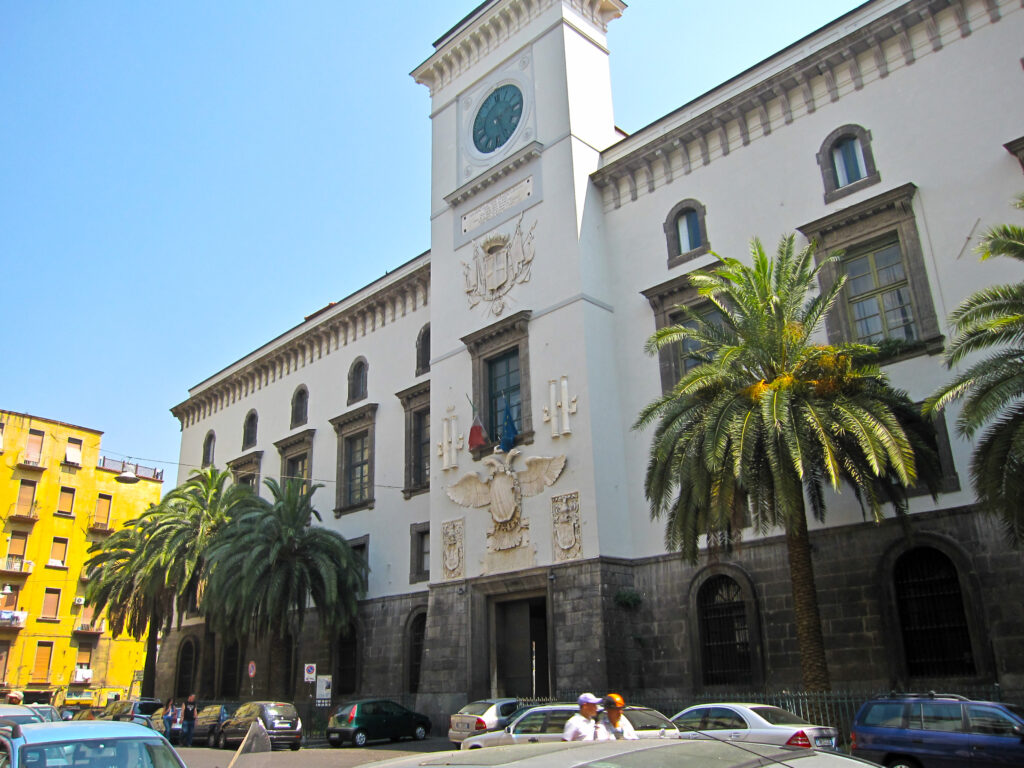
Ancient Norman castle, later a royal residence and seat of the courts. Located at the eastern edge of the ancient center, it tells the city's institutional and judicial history.

The Cathedral of Naples is the spiritual heart of the city and home to the cult of San Gennaro. The interior blends Gothic and Baroque styles with decorated chapels, paintings, and precious marbles. Not to be missed are the Chapel of the Treasure of San Gennaro and the Baptistery of San Giovanni in Fonte, among the oldest in the West. The Duomo is the ideal starting point for exploring the Decumani and for understanding the millenary stratification that characterizes the religious and civil soul of Naples.

Baroque church with a museum dedicated to the art of silk in Naples, testifying to the role of guilds and ancient crafts. A precious stop along Spaccanapoli among workshops and historic architecture.

Church of early Christian origins rebuilt in the Baroque era, hidden among alleys and courtyards near Mezzocannone. Intimate atmosphere and layered memories.
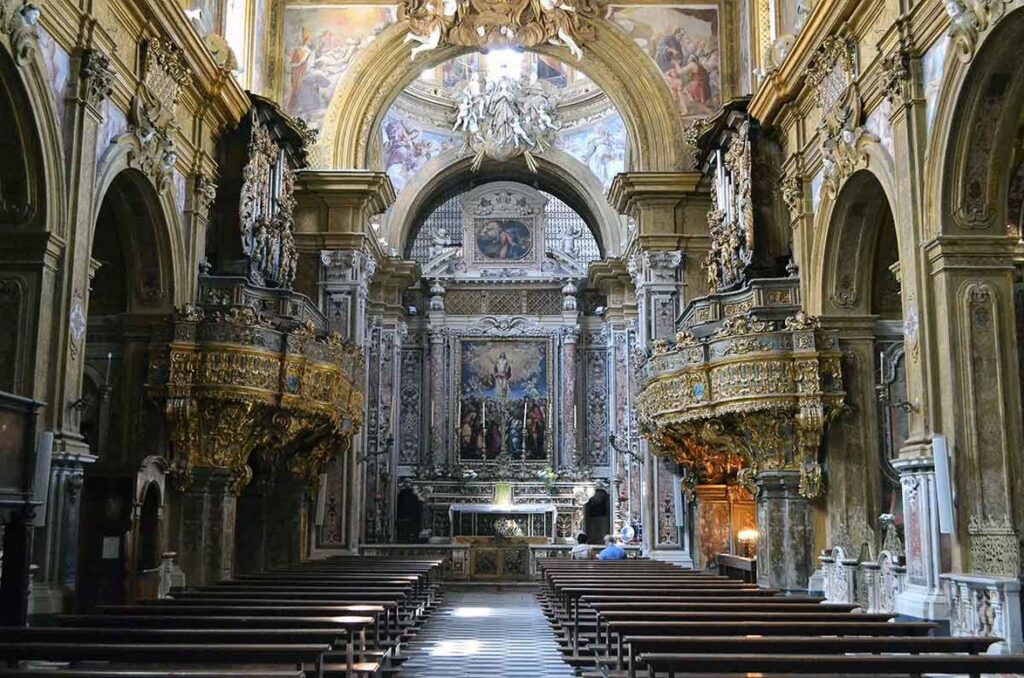
The monastic complex reveals cloisters, bell towers, and decorated halls, witnessing the Basilian order. A contemplative pause among the workshops of the most famous street.
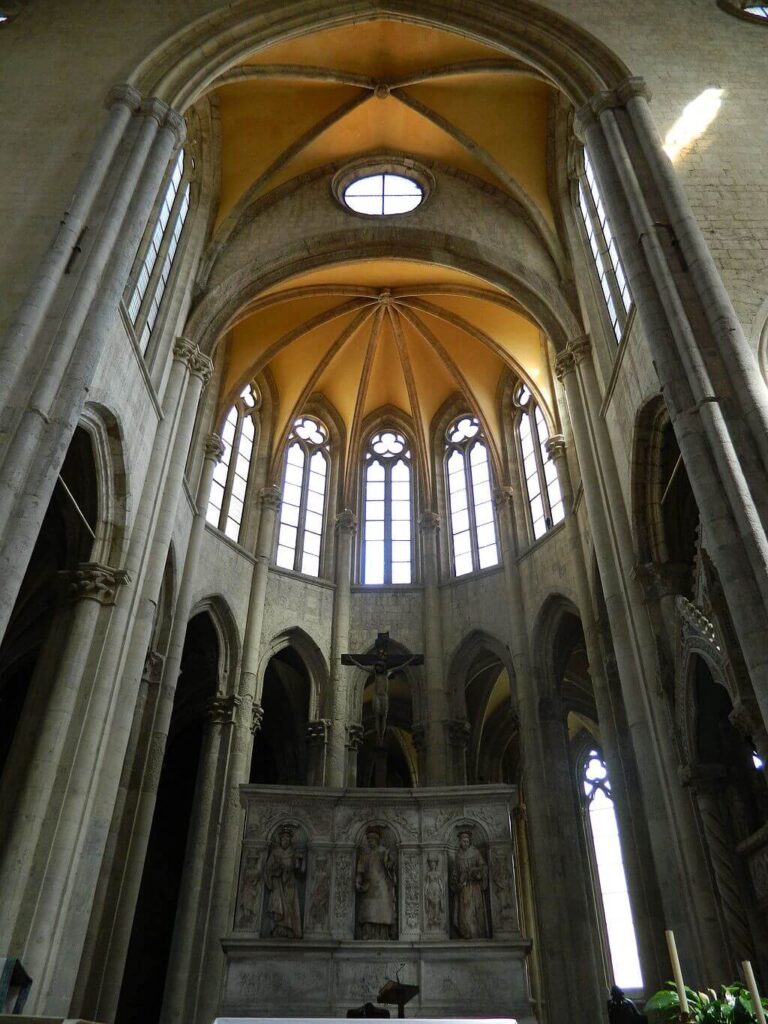
One of the most fascinating complexes of the Decumani, with its Gothic basilica and the underground archaeological route of the Roman Macellum, the ancient market of Greco-Roman Neapolis. The visit allows you to walk through streets, workshops, and rooms from the classical era, directly connecting the modern city to its roots.

Gothic basilica linked to the Conservatory, with works of art and a privileged location between Piazza Bellini and the Conservatory of Music. Intimate atmosphere and musical history.
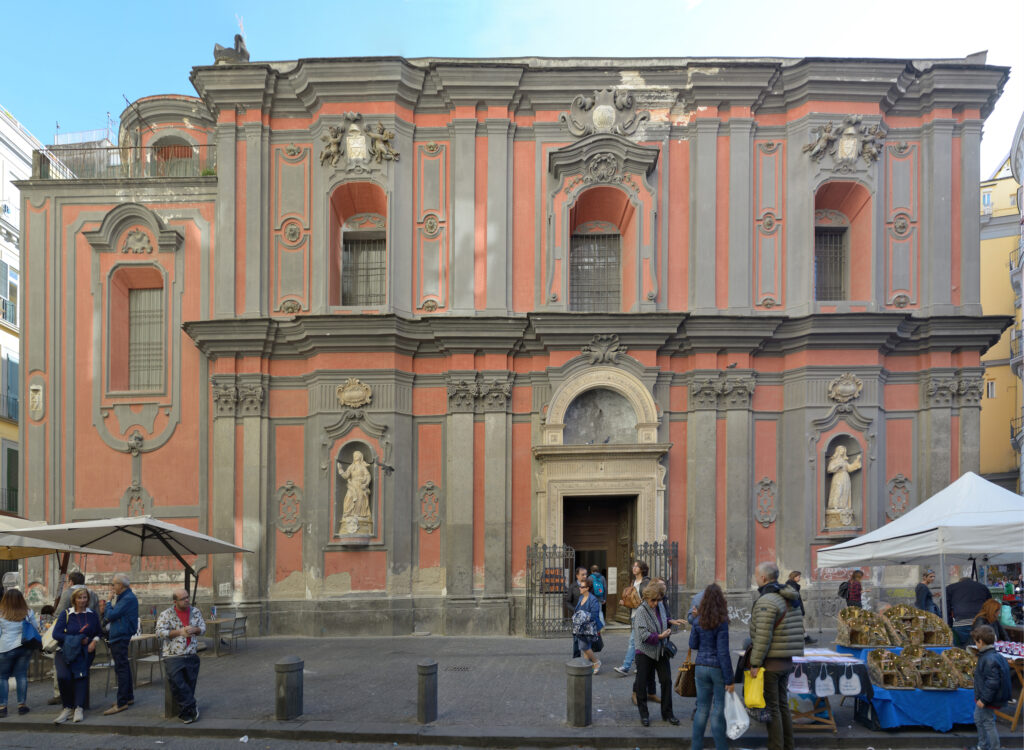
Small church in the heart of Spaccanapoli, famous for the funerary monument of Raimondo Orsini di Nola by Donatello and Michelozzo. A jewel of the Renaissance in Naples.

Double religious complex: the Gothic "Old" church with precious frescoes and the Baroque "New" one. It houses the Diocesan Museum, which showcases sacred art and the religious history of the city.

Famous for the rusticated facade of the ancient palace transformed into a church, the Gesù Nuovo preserves one of the most spectacular Baroque interiors in Naples. The nearby square, with the Obelisk of the Immaculate Conception, is one of the city's outdoor living rooms and a nodal point of Spaccanapoli. Here begins one of the most iconic walks of the historic center, among churches, palaces, and workshops.

Important Baroque church connected to the Girolamini complex, featuring works of the Neapolitan school and a spectacular facade on Via Duomo. It is an integral part of the religious and artistic fabric of the Decumani and testifies to the centrality of worship and sacred music in urban life.

Two churches overlooking the same square showcase different styles and functions of the city's Baroque. Scenographic interiors and a strong bond with the life of the neighborhood.

Baroque church built on the remains of the Temple of the Dioscuri, whose columns still stand on the facade. Interiors rich in stuccoes and paintings make it a gem overlooking one of the most picturesque squares of the Decumani.

Ancient deconsecrated church, now a museum and exhibition space in the historic center. It hosts temporary exhibitions and preserves the memory of the neighborhood.

Renaissance church and convent with an impressive majolica dome, located right next to Porta Capuana. A landmark of the eastern entrance to the ancient center.

Renaissance church with noble chapels and a cloister that safeguards historical memories and legends. A secluded corner just a few steps from Spaccanapoli, often off the beaten tourist path.

Renaissance palace housing collections of applied arts, armor, porcelain, and paintings. An atmospheric place to understand taste and patronage in Naples.

Elegant nineteenth-century gallery in iron and glass, located in front of the MANN. A scenic space housing shops and cultural initiatives, featuring luminous volumes and Art Nouveau details.

A historic Belle Époque café featuring Art Nouveau rooms and traditional pastry making. It serves as a refined city salon just a stone's throw from Piazza Municipio and the San Carlo Theater—the perfect spot to enjoy a sfogliatella or an espresso surrounded by art and history.

An immersive narrative museum that highlights the immense documentary heritage of the Archives of the Banco di Napoli. Through holographs, sounds, and true stories, the tales of workshops, families, and artists emerge. An original way to discover the city through its documents.

Among the most evocative places in the historic center, it preserves the cult of the anime pezzentelle (lost souls) and an underground hypogeum filled with ex-votos. A bridge between popular religiosity and Baroque art.

Museum itinerary that tells the history of medicine in Naples through collections, instruments, and historical spaces, including the famous Pharmacy of the Incurables (currently closed for restoration) with eighteenth-century furnishings. The itinerary reveals the role of hospitals and religious orders in healthcare and research, just a few steps from the Decumani. A unique European site for the quality and preservation of its interiors.

One of the most important archaeological museums in the world, it houses Roman, Pompeian, and Greek collections of exceptional value: mosaics, sculptures, and frescoes. It is the key to understanding Pompeii and Herculaneum and their relationship with ancient Naples.

Open-air street market between the Quartieri Spagnoli and Montesanto: stalls with fish, fruit, spices, and street food. A dive into the Neapolitan routine, perfect for tasting local products and observing daily life.

Gino Sorbillo belongs to one of Naples' oldest pizza-making families. He grew up in the family pizzeria and quickly learned the secrets of authentic Neapolitan pizza. With Gino Sorbillo, Neapolitan pizza has reached the highest levels of quality and has rightfully earned its place among Italy's finest culinary excellence.

Historic fish and fresh produce market near Corso Umberto. True, authentic atmosphere, colors, and voices introducing you to the ancient center from the station area.

Venue specializing in Neapolitan ragù, served in different variations and formats. It has become a popular spot among students and visitors exploring the axis between Mezzocannone and Spaccanapoli.

Perched on the highest point of the hill, Castel Sant Elmo is a star shaped fortress that dominates Naples with a unique view. Born as a defensive garrison and transformed several times, today it hosts exhibitions, reviews, and contemporary art displays. The bastions and perimeter walkways offer a panoramic walk between stone and sky, while the glimpses of Vesuvius and the Gulf offer memorable photos. A visit is recommended at sunset, when the light warms the tuff stone and the entire city lights up under your gaze.

The worldly heart of the island, an open-air living room filled with tourists, locals, and celebrities. From here, you can look out over the village and the sea, amidst the sound of bells and the aroma of coffee. At night, it turns into a movie set.
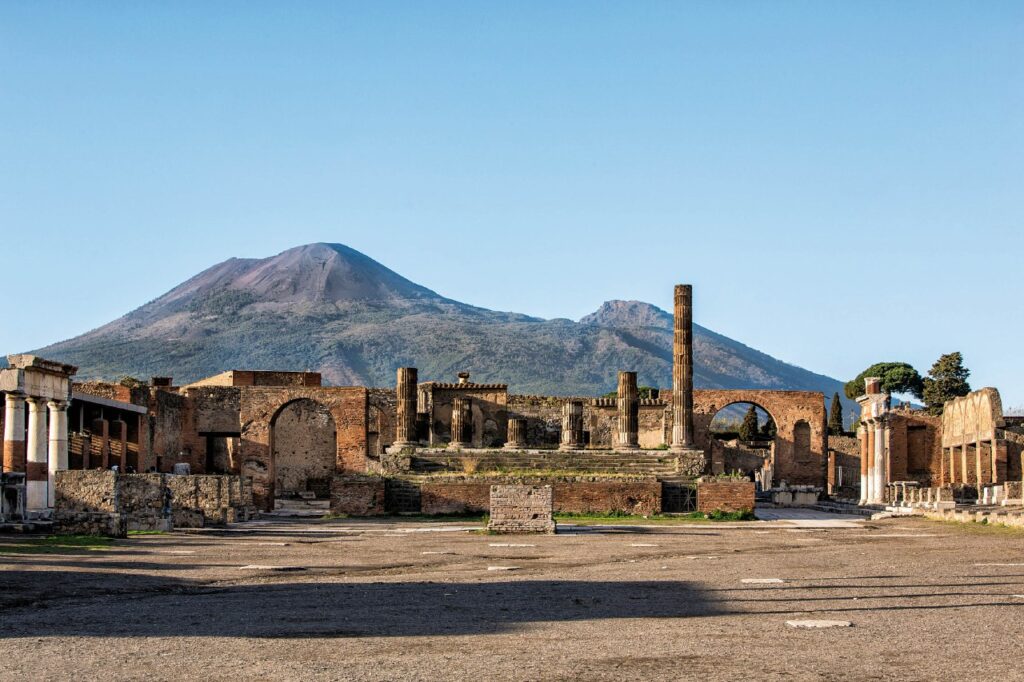
The ruins of Pompeii, buried in 79 AD, offer a unique journey through time. Perfectly preserved houses, temples, and mosaics tell the story of daily life in a vibrant and complex Roman city. Every street is an open-air museum that reveals both human genius and fragility.

Neoclassical residence with a garden on the Riviera di Chiaia and period collections. Ideal for a slow-paced visit focusing on architecture and greenery.

Next to Castel Sant Elmo lies the Certosa di San Martino, a masterpiece of Neapolitan Baroque. Airy cloisters, frescoed rooms, historic nativity scenes, and collections tell the story of centuries of art and spirituality. From the terraces, the view spans 360 degrees over the city. The complex, born in the Angevin era and expanded by great masters, offers a journey that alternates monastic silence and decorative wonder. It is an essential stop to understand the bond between Naples, its landscape, and the devotional imagery that found its home here.

Herculaneum, destroyed by the same eruption of Vesuvius, is an archaeological gem that preserves carbonized wooden remains and intact frescoes. More compact than Pompeii, it offers an intense and intimate experience of ancient life.

The three Faraglioni – Stella, di Mezzo, and Scopolo – emerge from the sea like natural monuments sculpted by the wind. They can be admired from the Belvedere of Tragara or from the sea, passing through the natural arch.

Large nineteenth-century park overlooking the sea; tree-lined avenues, fountains, and glimpses of the gulf.
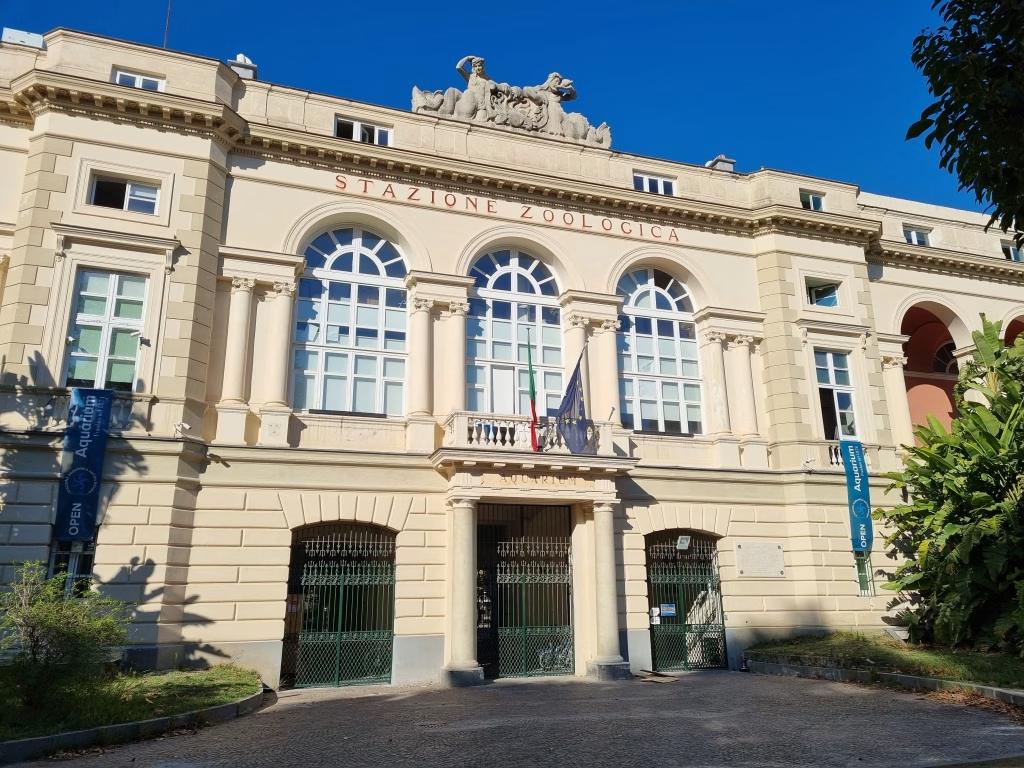
Historic marine research center with a museum pathway and educational aquariums in the Villa Comunale.

The famous sea cave illuminates the water with intense blue reflections. You enter by boat through a small opening, experiencing a moment of pure magic between light and silence.

The most famous volcano in the world is an unforgettable experience. Panoramic trails lead to the crater, amidst lava flows and views over the Gulf of Naples. An excursion through geology, nature, and myth.

Elegant salon with a war memorial and historic boutiques; starting point for shopping in Chiaia.
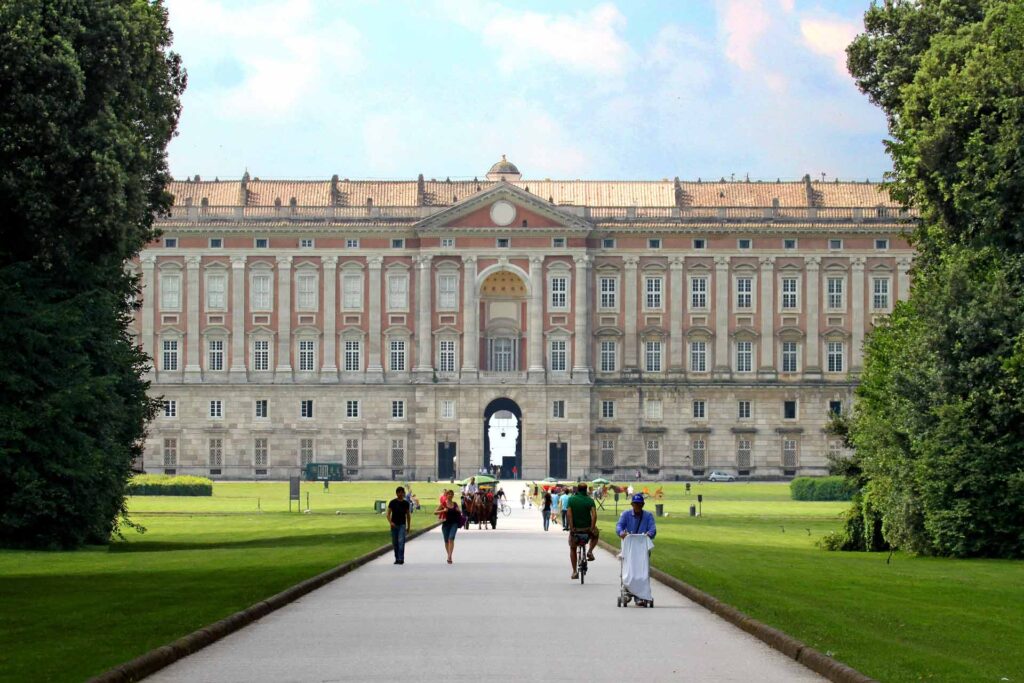
An imposing royal residence, the Royal Palace of Caserta enchants with its monumental staircase, frescoed reception rooms, and a park that stretches for kilometers. A UNESCO World Heritage site, it is a Baroque masterpiece of harmony and grandeur.

A large historic garden that slopes down towards the sea with lawns, groves, and glimpses. La Floridiana is the green oasis of Vomero: shady paths, benches, fountains, and a suspended atmosphere that invites you to slow down. In spring, the blossoming trees frame views of the Gulf; in summer, it offers shelter from the heat. Families love it for its wide spaces, readers for its quiet spots, and athletes for its sloping paths. Inside stands the villa with the Duca di Martina Museum, so nature and culture ideally hold hands.

Ancient residence of Tiberius, it dominates the sea with majestic ruins and panoramic terraces. The access route is a stroll through paths of Mediterranean scrub.

A volcanic territory of extraordinary energy, set among lakes, craters, and archaeological sites. Pozzuoli, Baia, and Cuma preserve ancient legends, Roman ruins, and a living, mysterious nature.

A flower-filled park that offers one of the most iconic views of the Faraglioni and Via Krupp. Statues, pergolas, and Mediterranean scents make the visit unforgettable.

Historic pedestrian shopping street connecting Piazza del Plebiscito to the heart of Chiaia; shops, cafés, and palaces.

Scenic terrace suspended between sky and sea, a privileged vantage point to admire the Faraglioni and the infinite blue. A corner of pure beauty.

One of the largest Roman amphitheatres in Italy, it preserves intact underground chambers. Walking among its arches is a journey into the power and grand spectacle of ancient games.

The elegant heart of Vomero, Piazza Vanvitelli is a crossroads of subway lines, funiculars, shopping, and historic cafes. The square breathes an orderly urban rhythm, amidst twentieth-century buildings, shop windows, and seating that invites brief stops. It is the ideal starting point for exploring the pedestrian streets of Scarlatti and Luca Giordano, or for reaching the Floridiana and San Martino in just a few minutes. In the evening, it lights up with lights and conversations, always maintaining a sober and bourgeois tone.
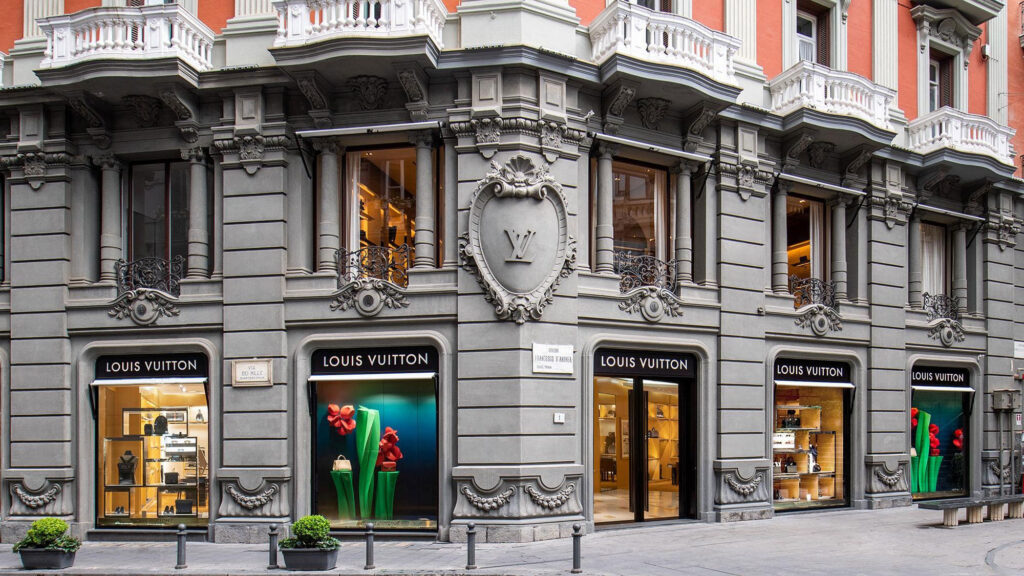
Fashion and design street with high-end boutiques and galleries; elegant atmosphere.

Art Nouveau masterpiece with an iconic helical staircase; one of the symbols of twentieth-century architecture in Chiaia.

An ancient Roman macellum, it is the symbol of the Phlegraean Fields. Its columns, which have emerged and submerged over time, tell the story of millennia of bradyseism and geology. A monument where the sea and time converse.

The most iconic pedestrian street in Vomero, dotted with shops, pastry stores, and bookstores. The Art Nouveau architecture, neat outdoor seating, and facade details create an elegant atmosphere, perfect for relaxed shopping. Street musicians and small temporary exhibitions discreetly liven it up. It is a bright urban corridor connecting squares and alleys, always well-kept and busy at all hours of the day.

A hairpin turn road carved into the rock that connects Marina Piccola to the Gardens of Augustus, a masterpiece of engineering and poetry.

A high and quiet village, rich in craftsmanship, scents, and panoramic terraces. It preserves the authenticity of the most intimate and Mediterranean side of Capri.

Imposing seventeenth-century palace perched over the sea; spectacular at sunset. Viewable mainly from the outside.

Surrounded by woods, Lake Avernus was considered the gateway to the Underworld by the ancients. Today it is an oasis of peace and natural beauty, perfect for walks and photography.

An elegant pedestrian backbone that crosses the neighborhood from north to south. Among bistros, independent boutiques, and bookstores, Via Luca Giordano is the favorite walk for residents. Rows of trees and well-kept paving accompany those who walk, while side views reveal courtyards and historic staircases. It is a place suitable for everyone: families, morning runners, and urban architecture enthusiasts.

A historic theater in Vomero, born in the 1930s, it preserves the charm of a twentieth-century bourgeois hall. It hosts seasons of prose, music, and encounters, bringing national artists and quality productions to the stage. The elegant and intimate hall offers a close and refined viewing experience. A cultural landmark that tells the story of the Neapolitan theatrical tradition with a contemporary style.

The highest peak of the island, reachable by chairlift, offers a breathtaking panorama over the Gulf of Naples and the Amalfi Coast.

A unique underwater archaeological site in the world, where submerged Roman mosaics and columns can be explored. Boat trips with transparent bottoms allow visitors to admire the ancient city swallowed by the sea.
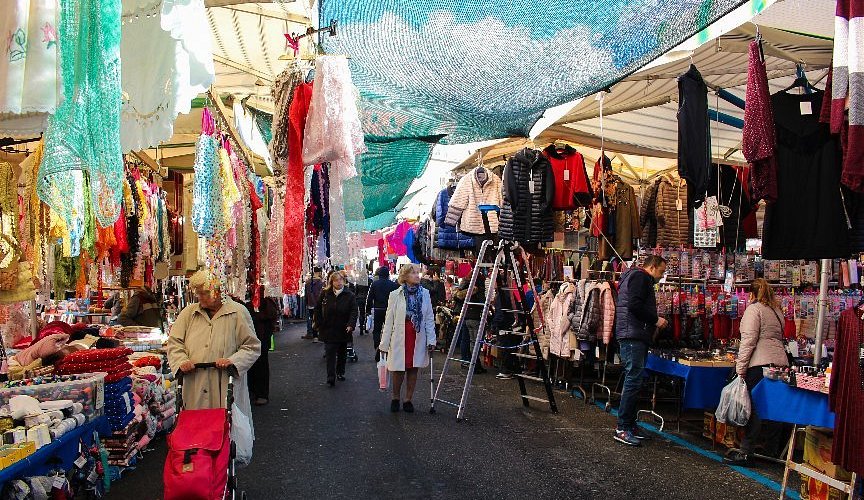
Among the most authentic souls of Vomero, the Antignano market brings together fruit stalls, typical specialties, vintage objects, and a few antique gems. It is a popular and lively microcosm, useful for tasting local flavors, observing the daily life of the neighborhood, and finding unique pieces. A morning visit is recommended, when the colors are brighter and the scents blend through the alleys.

Located in the heart of Naples' ancient center, the Sansevero Chapel Museum is a jewel of international artistic heritage. Baroque creativity and dynastic pride, beauty and mystery intertwine here to create a unique atmosphere, almost frozen in time.
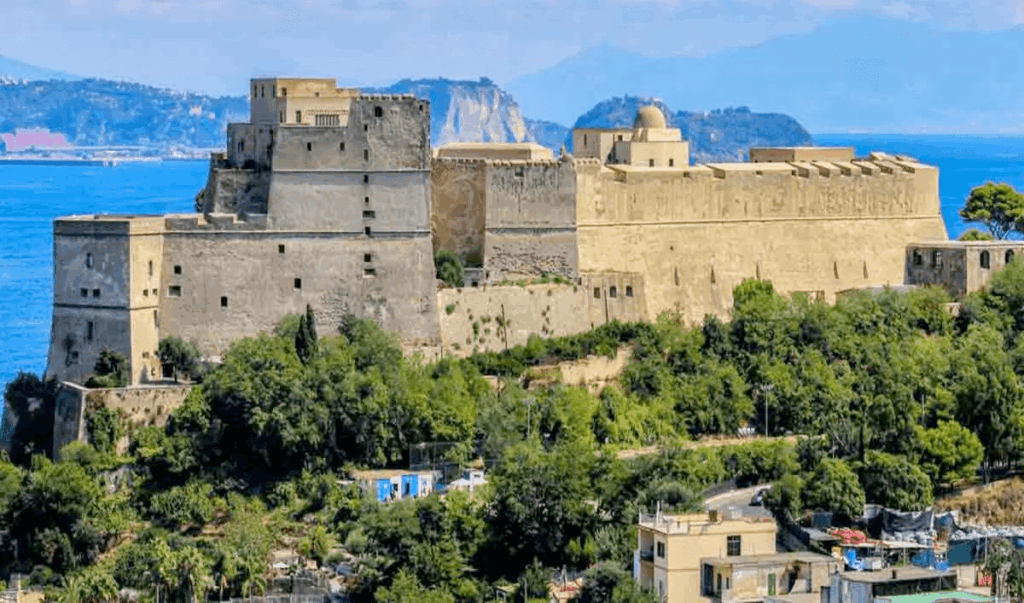
A panoramic fortress that houses the Archaeological Museum of the Phlegraean Fields. From its ramparts, you can look out over the sea, surrounded by Roman ruins and Aragonese history.

The main port of Capri, the point of arrival and departure. Among colorful boats and restaurants, one can breathe the maritime soul of the island.

The most visited tourist attraction in Italy! In the heart of the Spanish Quarters, the tribute to the idol of Neapolitan football.

Piazza del Plebiscito is the monumental symbol of Naples. Located between the Royal Palace and the famous colonnade of the Basilica of San Francesco di Paola, it is one of the largest squares in Italy, a venue for major events and an iconic setting between the sea and the city center.

Historic city theater with a program of prose and music; intimate hall, great Neapolitan tradition.

An ancient Greek settlement, Cuma preserves the Sybil's Cave and temples overlooking the sea. A place of mystery and myth, immersed in Mediterranean nature.

The symbol of Ischia, it stands on a small island connected by a bridge. Among towers, churches, and gardens, it offers spectacular views and centuries of history.

Bacoli offers crystal-clear beaches and Roman ruins, while from Cape Miseno the view embraces the entire Gulf. Nature and culture blend together in a spectacular marine setting.

Natural thermal pools among the rocks, where warm water and the sea merge for a relaxing swim under the stars.

Pedestrian promenade with a view of Castel dell’Ovo, Mount Vesuvius, and the Gulf; bars and gelato shops along the way.
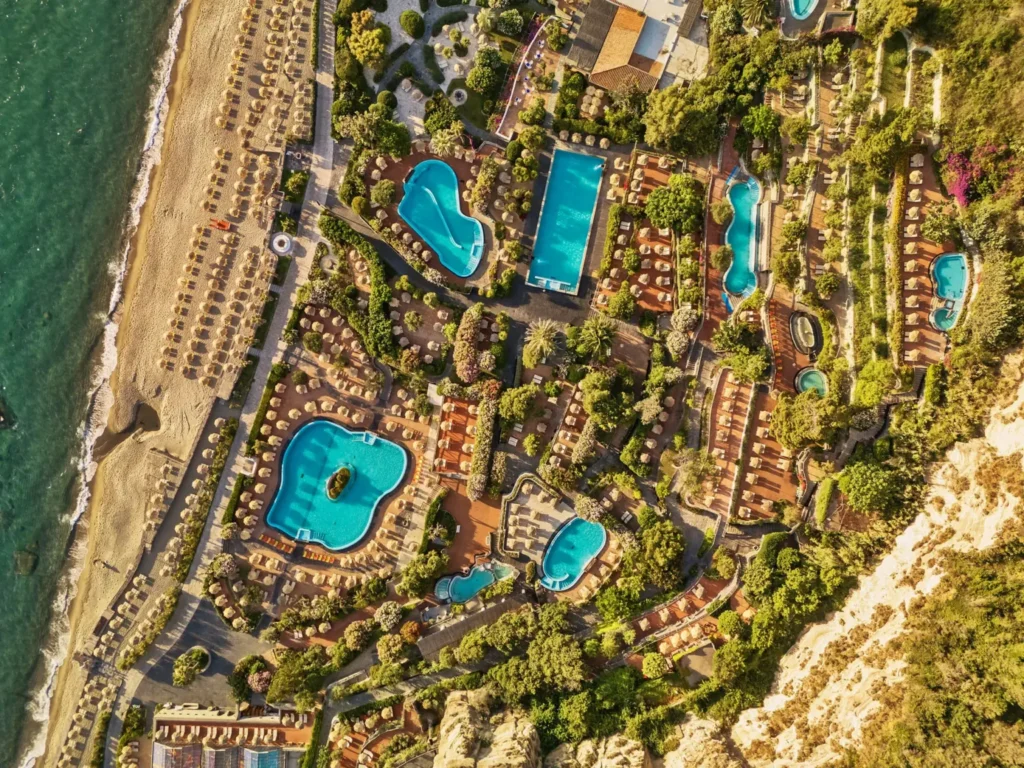
A thermal complex immersed in greenery with panoramic pools overlooking the sea of Citara, combining health and landscape.

An elegant pearl scented with citrus fruits, Sorrento is a tapestry of terraces overlooking the sea, narrow alleys, and craftsmanship. Its views of Mount Vesuvius and golden sunsets make it unforgettable.
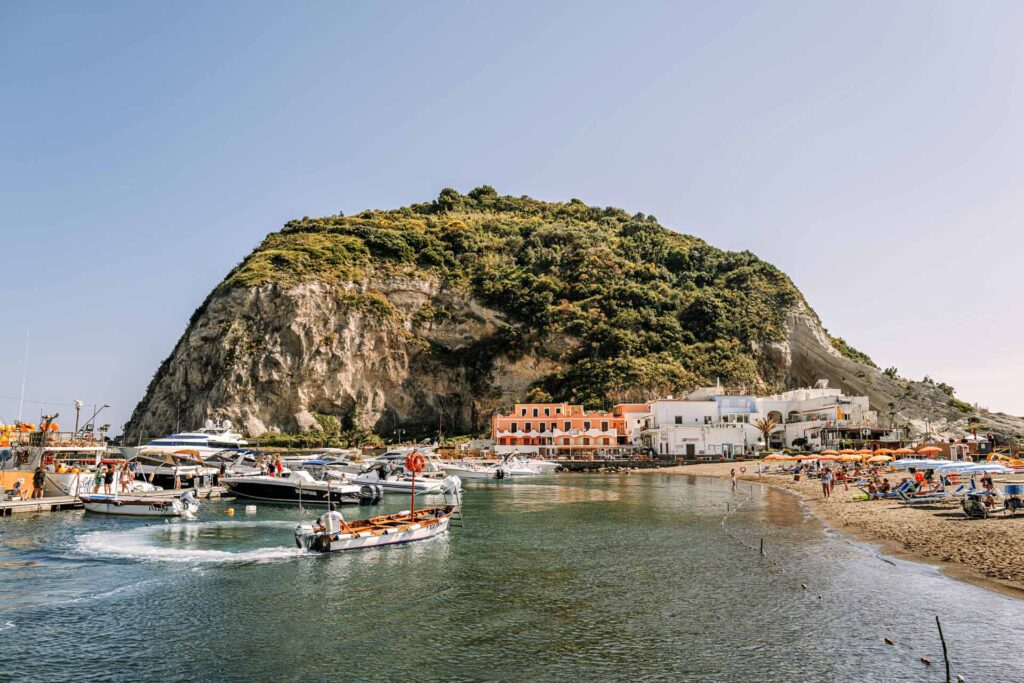
A timelessly charming fishing village with white alleys and sea-view restaurants. A symbol of the Ischian "dolce vita."

A route of over four hundred steps connecting the Certosa to Corso Vittorio Emanuele, winding through gardens, embankments, and ancient houses. The Pedamentina is one of Naples' most scenic descents: it combines urban history, a gentle effort, and open views. We recommend it going downhill and with comfortable shoes. In the morning the light is splendid, in the evening it is better to avoid.
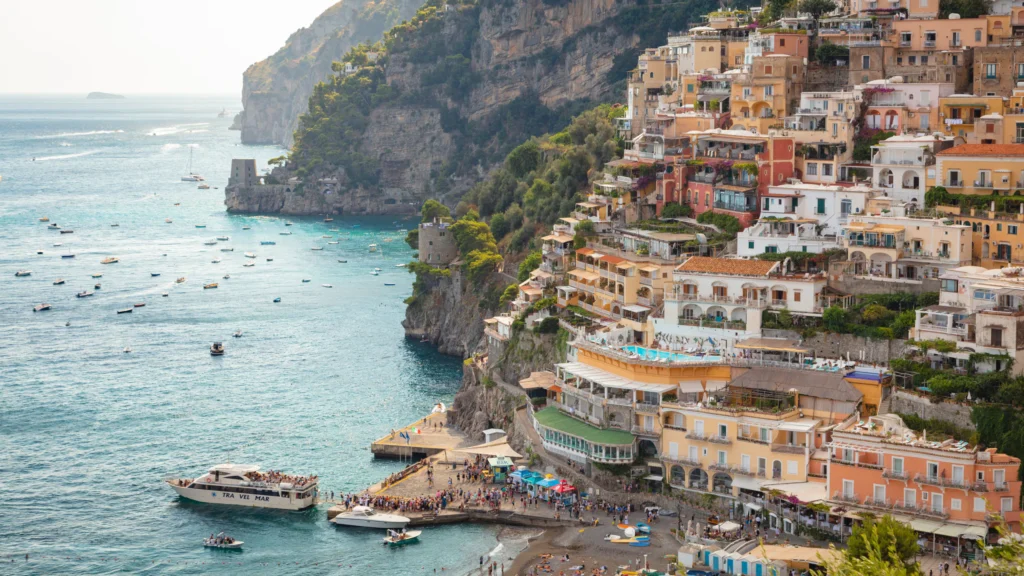
Colorful houses cascade down toward the sea. Boutiques, stairways, and beaches nestled between the rocks make it one of the most iconic destinations on the Amalfi Coast.

Large open space by the sea, a scenic spot for photos and sunsets; temporary events and installations.
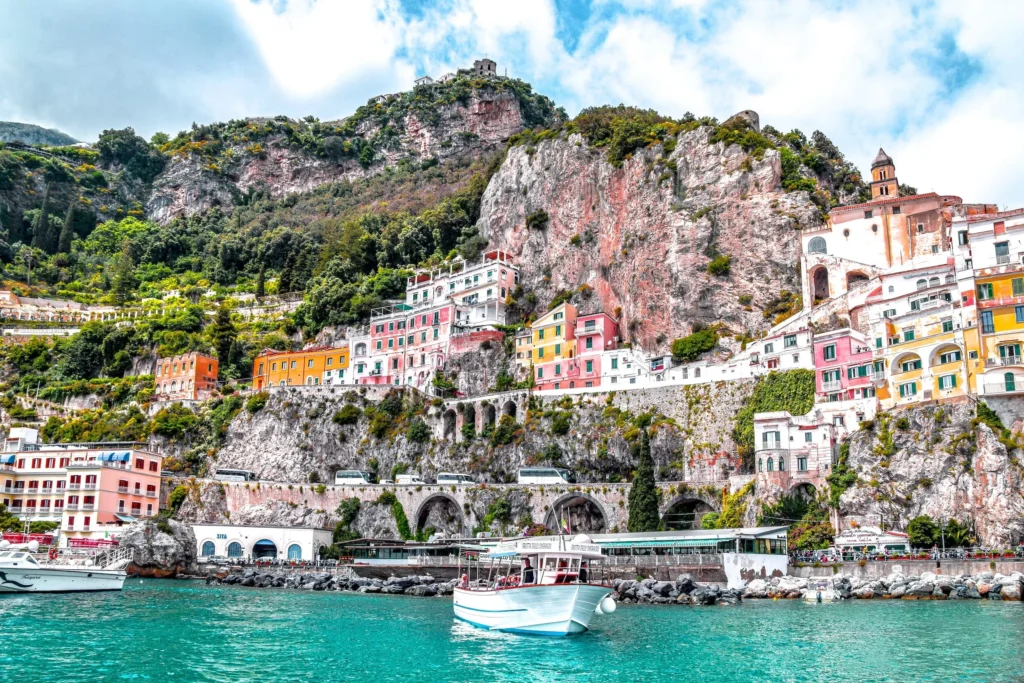
A charming seaside town, with its Arab-Norman Cathedral and streets scented with lemon. A historic and seaside jewel unique in the world.

Stroll along the tourist marina among boats and small restaurants; authentic maritime atmosphere.
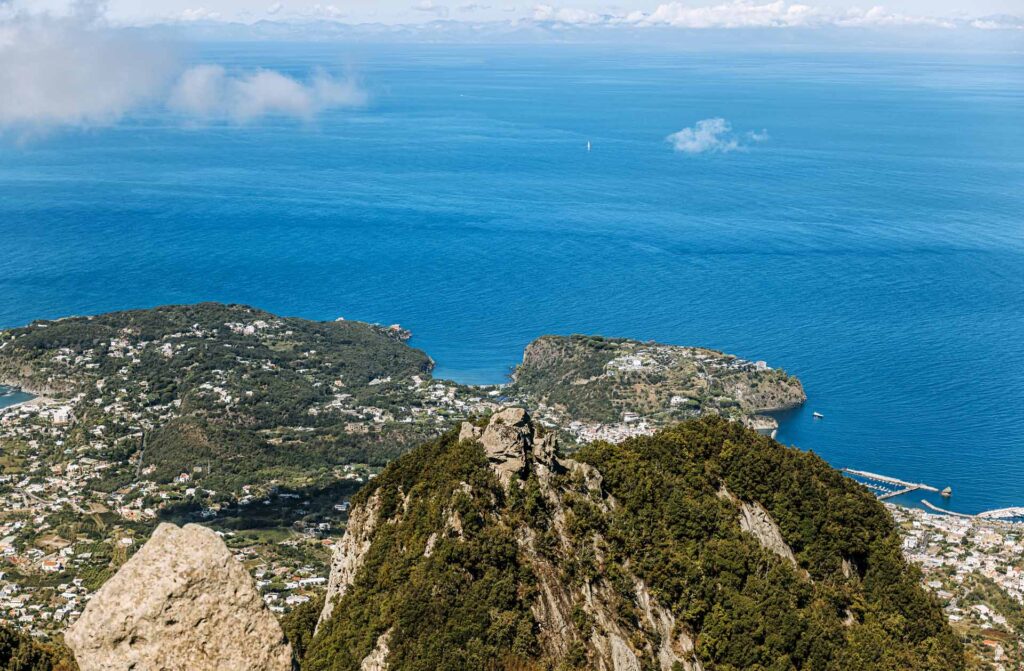
The highest peak of the island, reachable via trails immersed in greenery. From the summit, a breathtaking panorama over the entire Gulf.

A small neighborhood park much loved by residents, with well-kept flowerbeds, children's playgrounds, and short paths for running or walking. It offers shade, benches, and a family atmosphere, ideal for a quiet break away from the traffic. A tiny but precious oasis in the urban fabric of Vomero.

A large, tree-lined roundabout that organizes the neighborhood's traffic, featuring pedestrian areas, seating, and venues all around. It is a practical hub for daily life: banks, bookstores, bars, bus stops, and subway access. Quiet residential streets and views climbing up toward San Martino branch out from here.
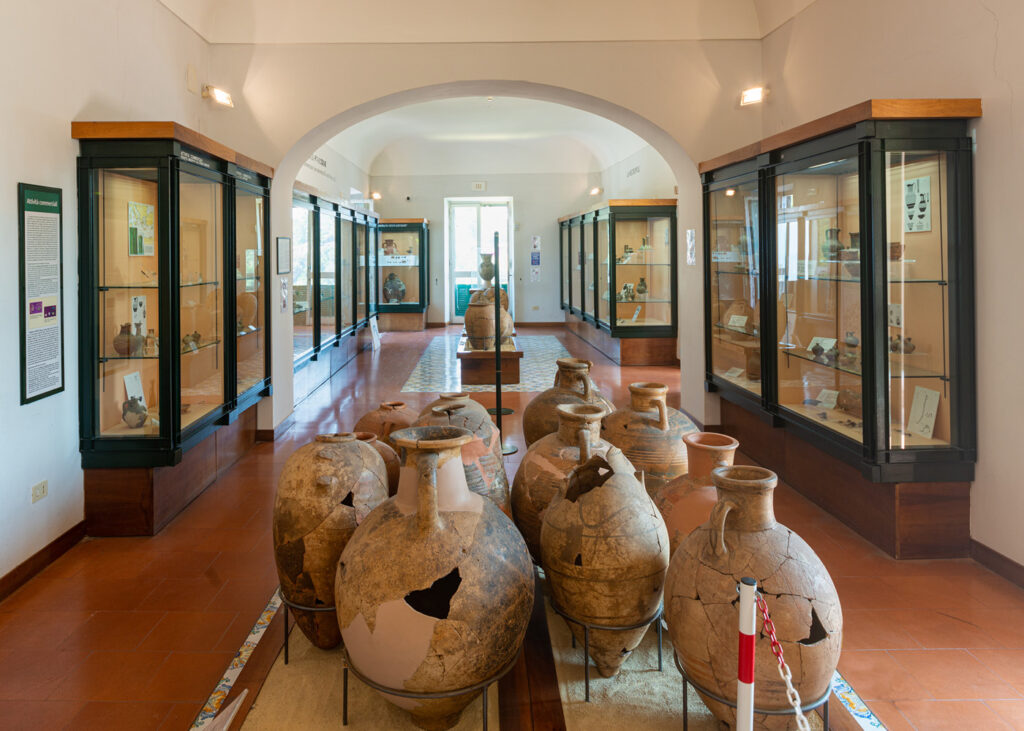
Located in Villa Arbusto in Lacco Ameno, it tells the story of the island's Greek origins and houses the famous Nestor's Cup.

An elegant terrace overlooking the Coast, Ravello fascinates with its villas and gardens suspended over the sea. The notes of the summer festival echo amidst history and beauty.

A long stretch of golden sand with natural thermal springs, ideal for a rejuvenating swim.

Between Castellammare and Vico Equense, Mount Faito offers trails immersed in the woods and views dominating the Gulf. Perfect for trekking and relaxation.

Small literary park with Virgils cenotaph and Giacomo Leopardis tomb; a silent oasis near Mergellina.
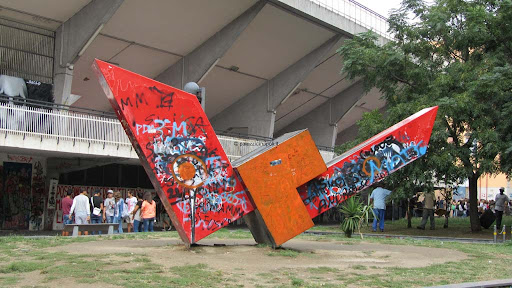
A large square featuring a war memorial and the nearby Collana Stadium, a historic sports facility of the neighborhood. Amidst fields and gyms, the area hosts sporting events and fixtures involving schools and associations. A lively and dynamic area, and a reference point for anyone practicing physical activity in Vomero.

Church with a late-Baroque facade and rich interiors; usually open for worship with variable hours.

An elegant and well-kept village, dominated by the famous mushroom-shaped rock, the symbol of the island.
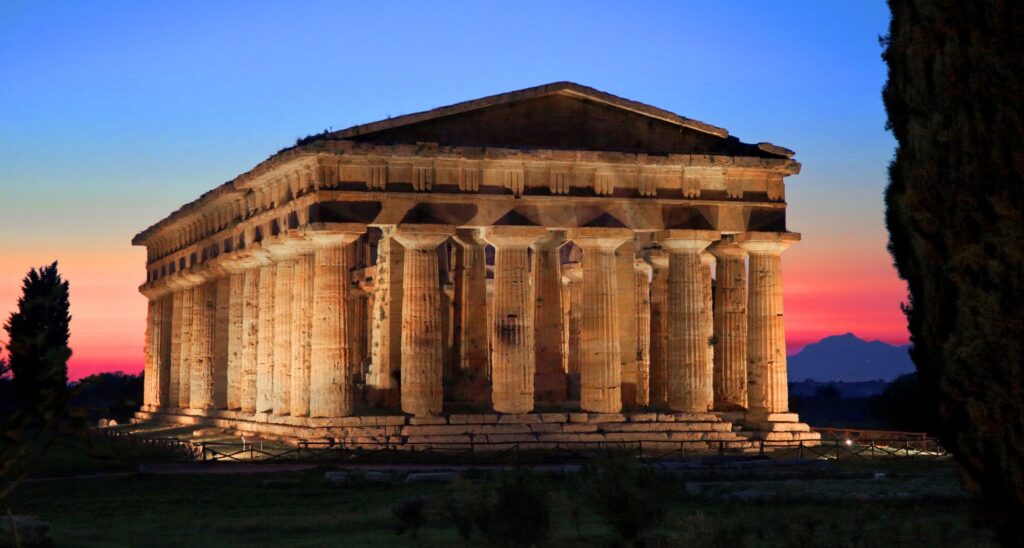
One of the best-preserved archaeological sites of the Greek world, featuring imposing Doric temples and a museum of rare beauty. A journey into Magna Graecia.
An elegant residential street, rich in bookstores, workshops, and small galleries. It is a quiet backbone that tells the story of Vomero's bourgeois side, amidst elegant doorways and well-kept shops. Excellent for those looking for a less crowded alternative to the major pedestrian streets.

A medieval hilltop village with a Romanesque cathedral and views over the valley. Stone-paved streets and silence enchant visitors.

A small white church overlooking the sea, among the most photographed in Italy. A place of faith and a unique panorama.

Ancient complex with a cloister; a cozy space within the elegant grid of the neighborhood.
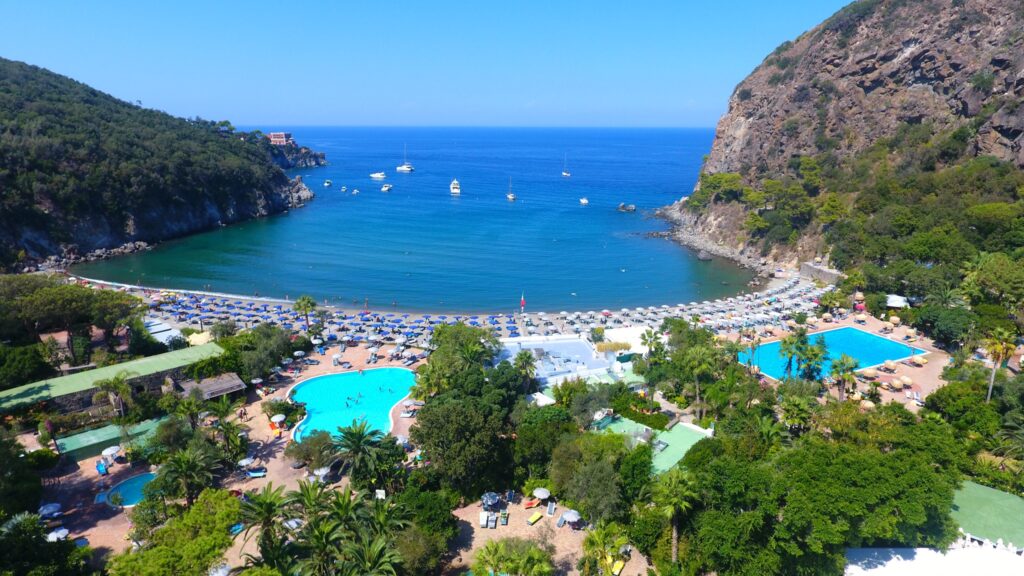
An oasis of relaxation with thermal pools, gardens, and contemporary art, nestled in the bay of San Montano.

Section of the museum dedicated to historic carriages and the means of travel of the aristocracy.

A panoramic village set between the Gulf of Naples and Salerno, famous for its cuisine and sea-view trails. A perfect blend of gastronomy and scenery.
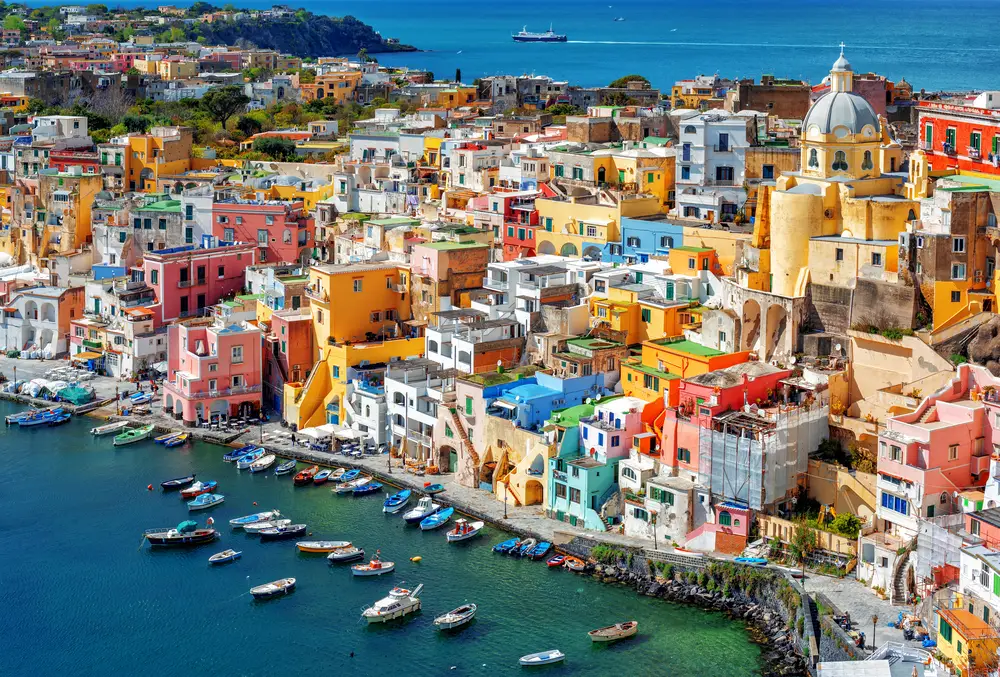
An amphitheater-shaped fishing village, with colorful houses and moored boats. The visual and narrative heart of the island.

Historic viaduct crossing over the Spanish Quarters connecting Chiaia: a remarkable piece of Bourbon engineering.

A place of worship tied to a deeply rooted popular devotion. The simple facade leads to a bright interior with fine altars and paintings. It is a brief but meaningful stop to understand the relationship between the neighborhood and religious tradition, especially during festivities.
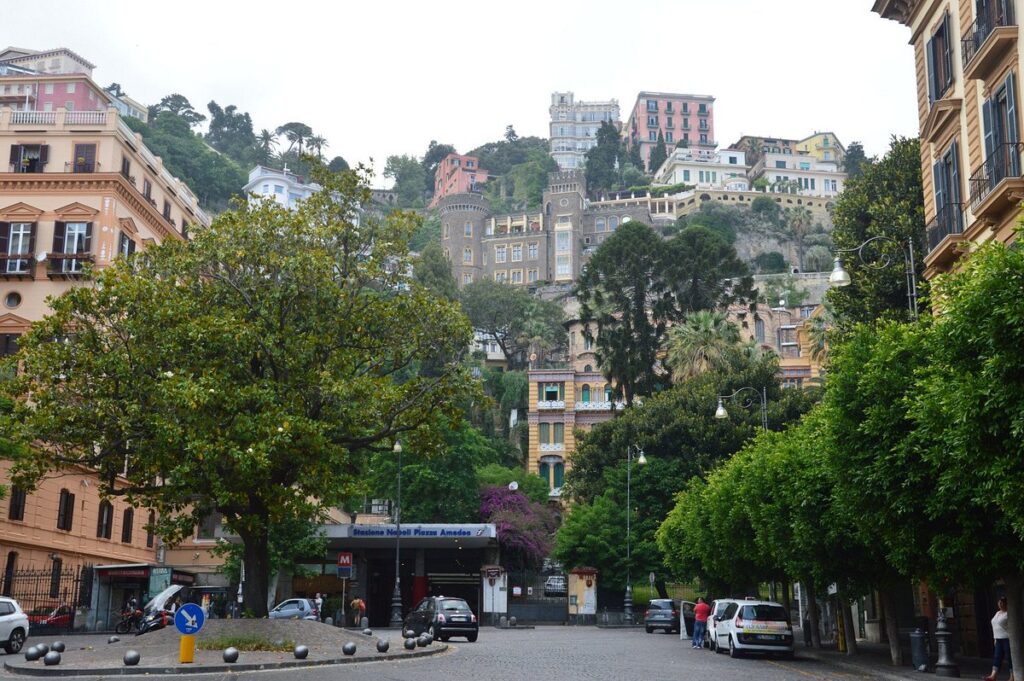
Elegant hub with metro and funicular stations; a practical point to explore the streets of Chiaia.
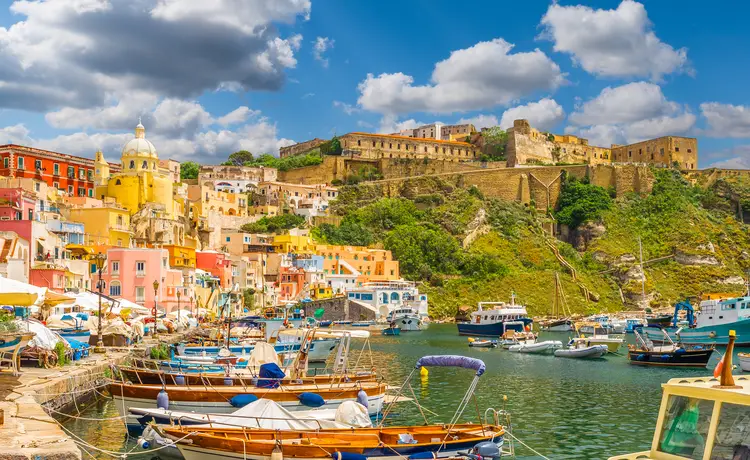
The oldest and most panoramic district, featuring Palazzo d'Avalos and spectacular glimpses of the sea.
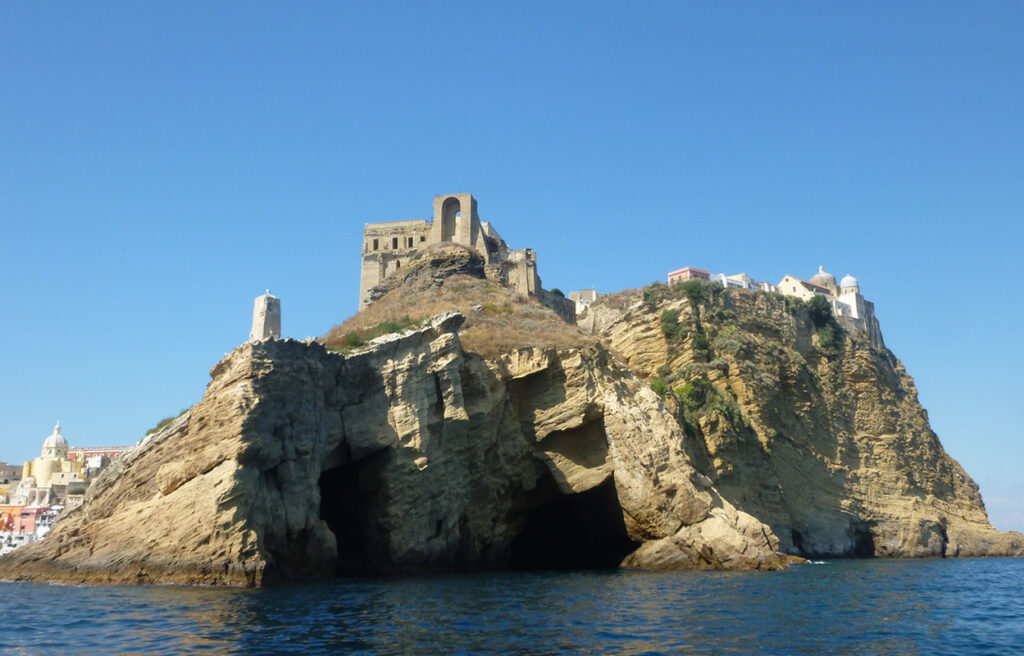
A thousand-year-old monastery with works of art and a breathtaking view of the Gulf.

A modern building dedicated to the saint of Assisi, with wide and bright spaces designed for the community. It hosts pastoral activities and cultural initiatives, becoming a meeting point as well as a place of prayer. The synthesis between contemporary language and liturgical function is interesting.

Prestigious building with Art Nouveau elements along via Filangieri; refined urban context.
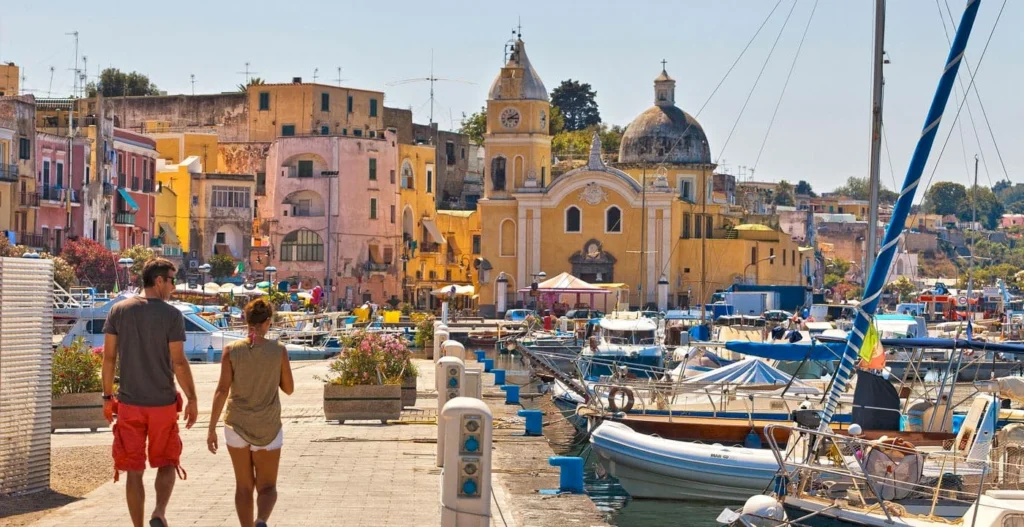
The main port of the island, lively and picturesque, the gateway to Procida.
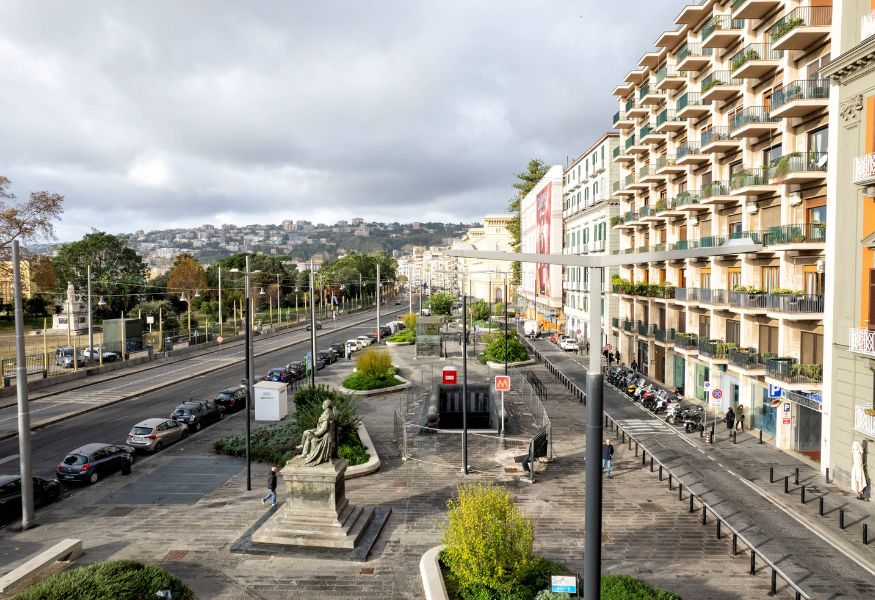
Green space with the homonymous church and venues; a meeting point for students and residents.

A long, panoramic mid-hillside road, dotted with viewpoints and venues. Ideal for an evening stroll with a view of the illuminated city, among terraces and small gastronomic stops. The curves frame ever-changing views of Mount Vesuvius and the sea.

A wide sandy beach with a view of the small island of Vivara, ideal for romantic sunsets.

A lively little square, a hub connecting the funicular, schools, bookstores, and cafes. It is the natural entrance to the neighborhood for those coming up from the center: just a few dozen meters and you are already immersed in shop windows and pedestrian streets. Excellent for a breakfast before visiting San Martino or the Floridiana.

Historic avenue parallel to the seafront with noble palaces, gardens, and cafes; ideal for walking in the shade.

Panoramic point over the bay with a view of the small harbor boats and Castel dell Ovo in the distance.

A small island connected to Procida, a protected natural oasis and a sanctuary for biodiversity.

A panoramic terrace dedicated to the writer, overlooking Corricella and the open sea.

One of the busiest stations on Line 1, featuring installations and furnishings that reflect the aesthetic care of the so-called "Art Stations." From here, you can easily reach the main attractions of Vomero and the interchange nodes with funiculars and buses.
Stops among historic bars and well-known pastry shops of the neighborhood: a typical experience involving espresso, sfogliatella, and conviviality.

An elegant little square with sea views and a convivial atmosphere, nestled among local venues and historic architecture.

A large panoramic terrace in the Vomero district of Naples, famous for offering a breathtaking view over the entire city and the gulf, with Mount Vesuvius in the foreground.

A small ethnographic museum that tells the story of 19th-century island life and the legend of Graziella.

Street of major fashion brands between Piazza dei Martiri and via Filangieri; luxury shop windows and an international atmosphere.

Celebratory monument that dialogues with the seafront; photographic spot during events and demonstrations.
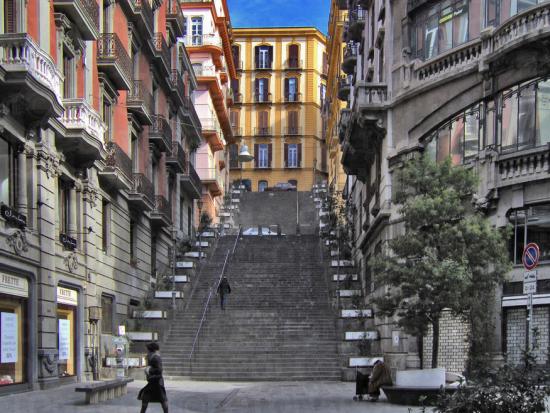
Historic stairway connecting different levels of the neighborhood; picturesque urban architecture.
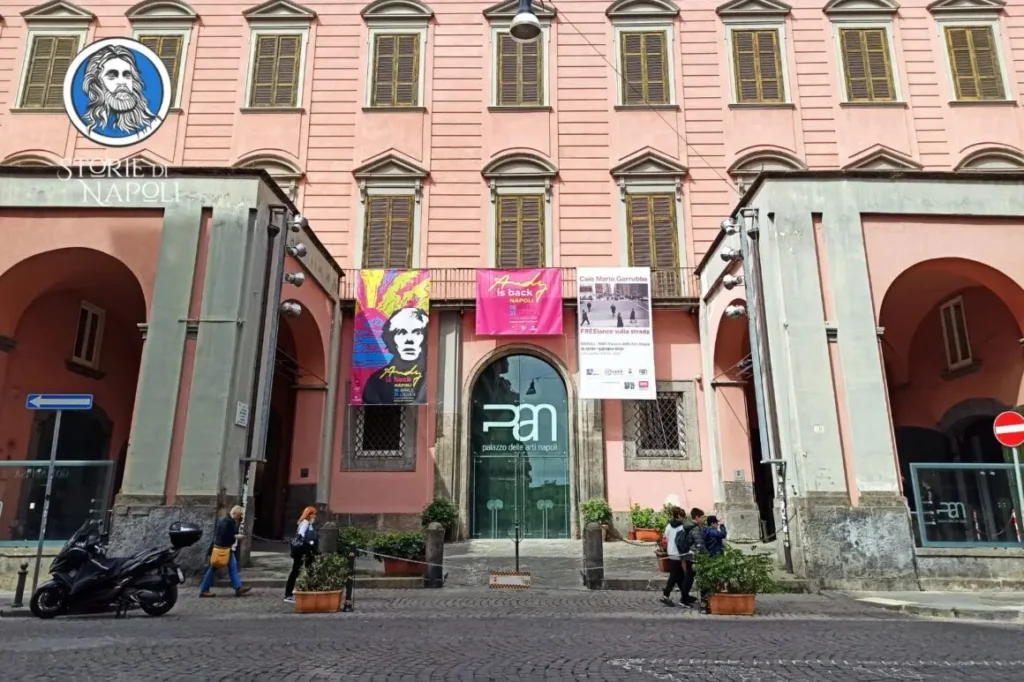
Contemporary art center with temporary exhibitions, events, and educational activities; a cultural point of reference.

Monumental fountain with allegorical figures, the scenographic centerpiece of the square.

Direct view of the sea, perfect for shots towards Vesuvius and Castel dell Ovo; close to bike paths.

One of the entrances to the Bourbon underground tunnel; a route through cisterns, cavities, and military history.